
Cabin Fever
The Fault in Our Cars

I hate modern cars. All of them. For the last two decades, nearly every enjoyable element of owning and driving an automobile has been stripped away in the name of safety, cost-cutting, and environmental activism.
I grew up in the suburbs of a major American city. You needed a car to go anywhere or do anything. In those places, that necessity shapes a large part of people’s lives. Most of them wouldn’t have it any other way.
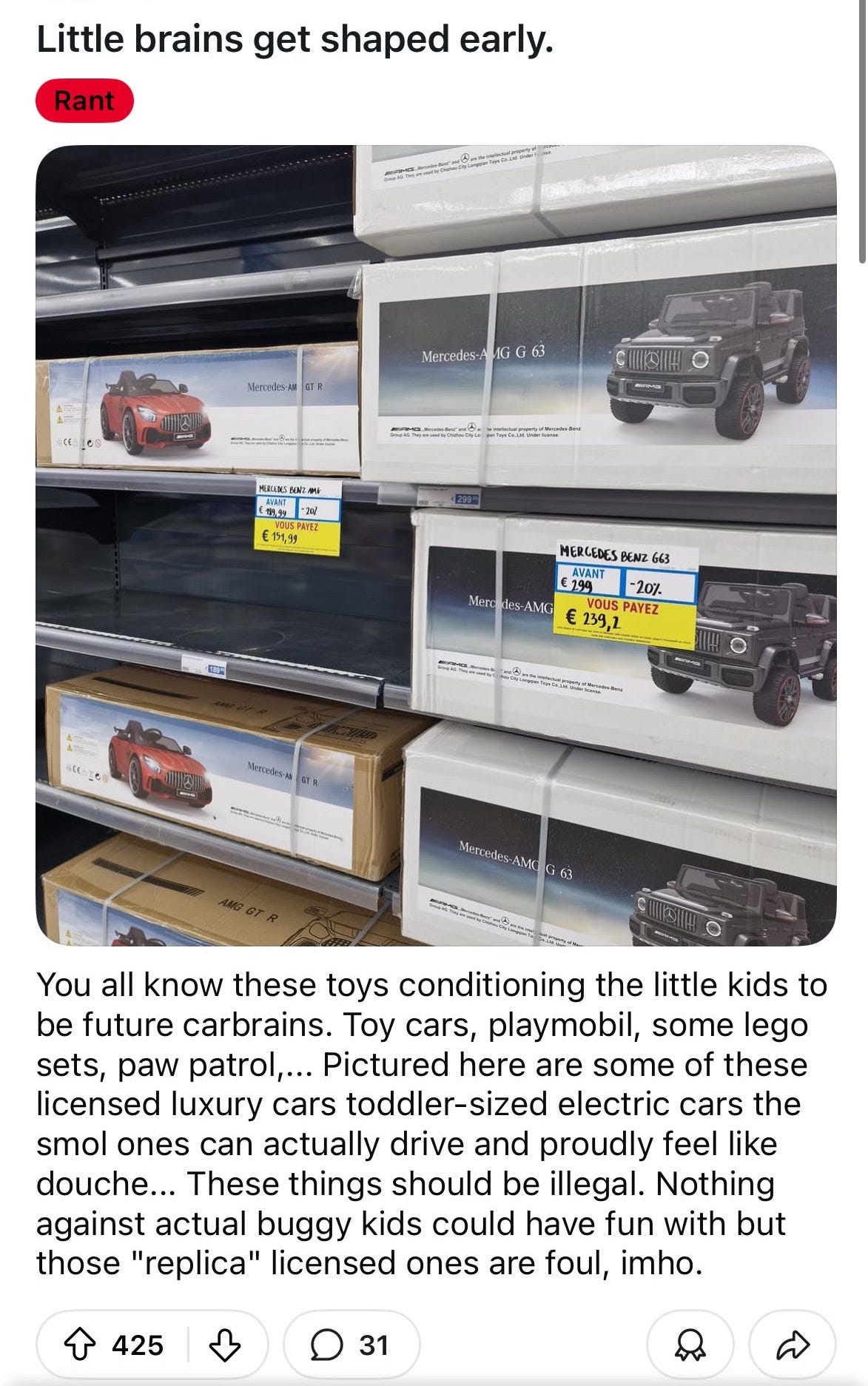
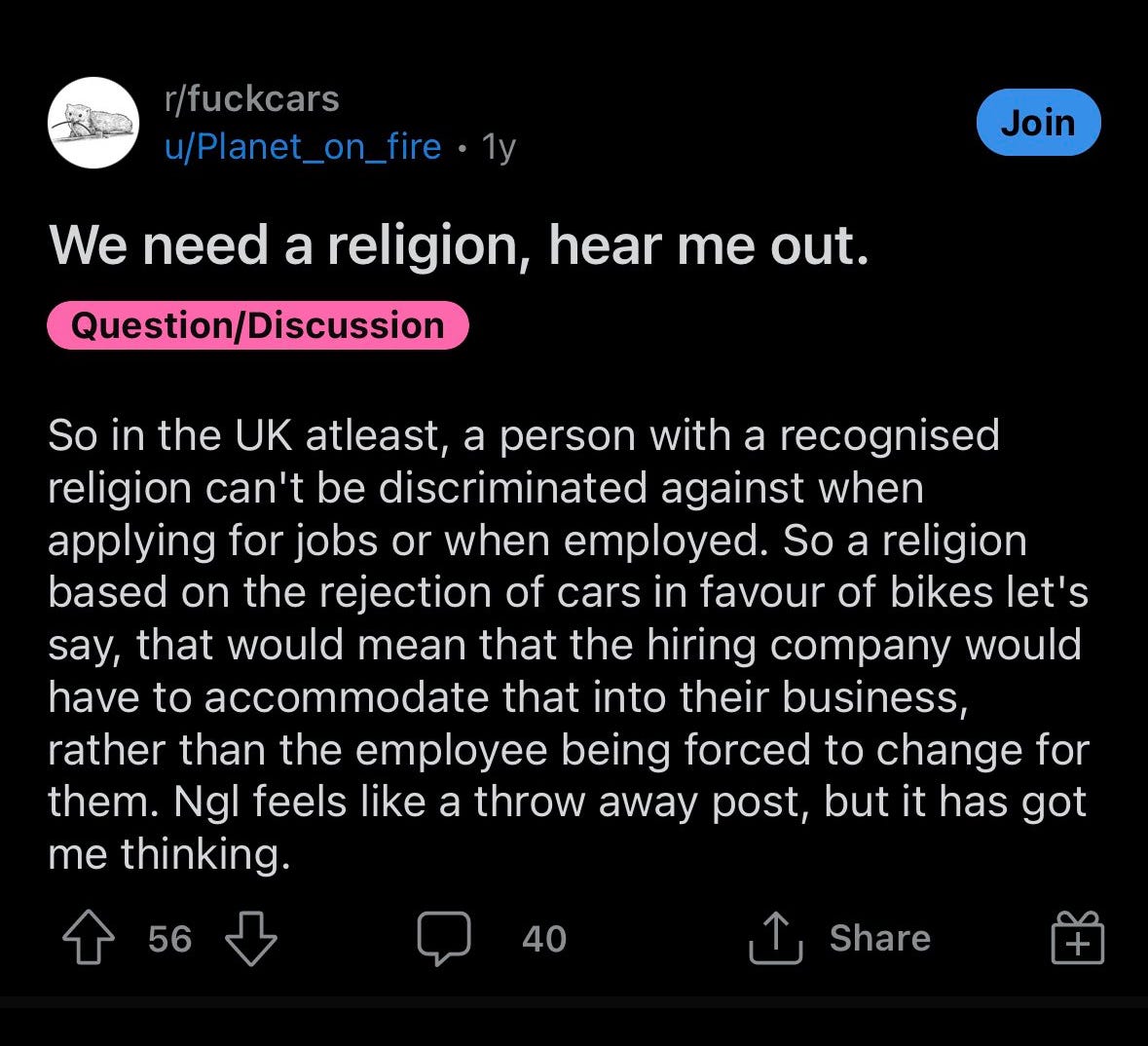
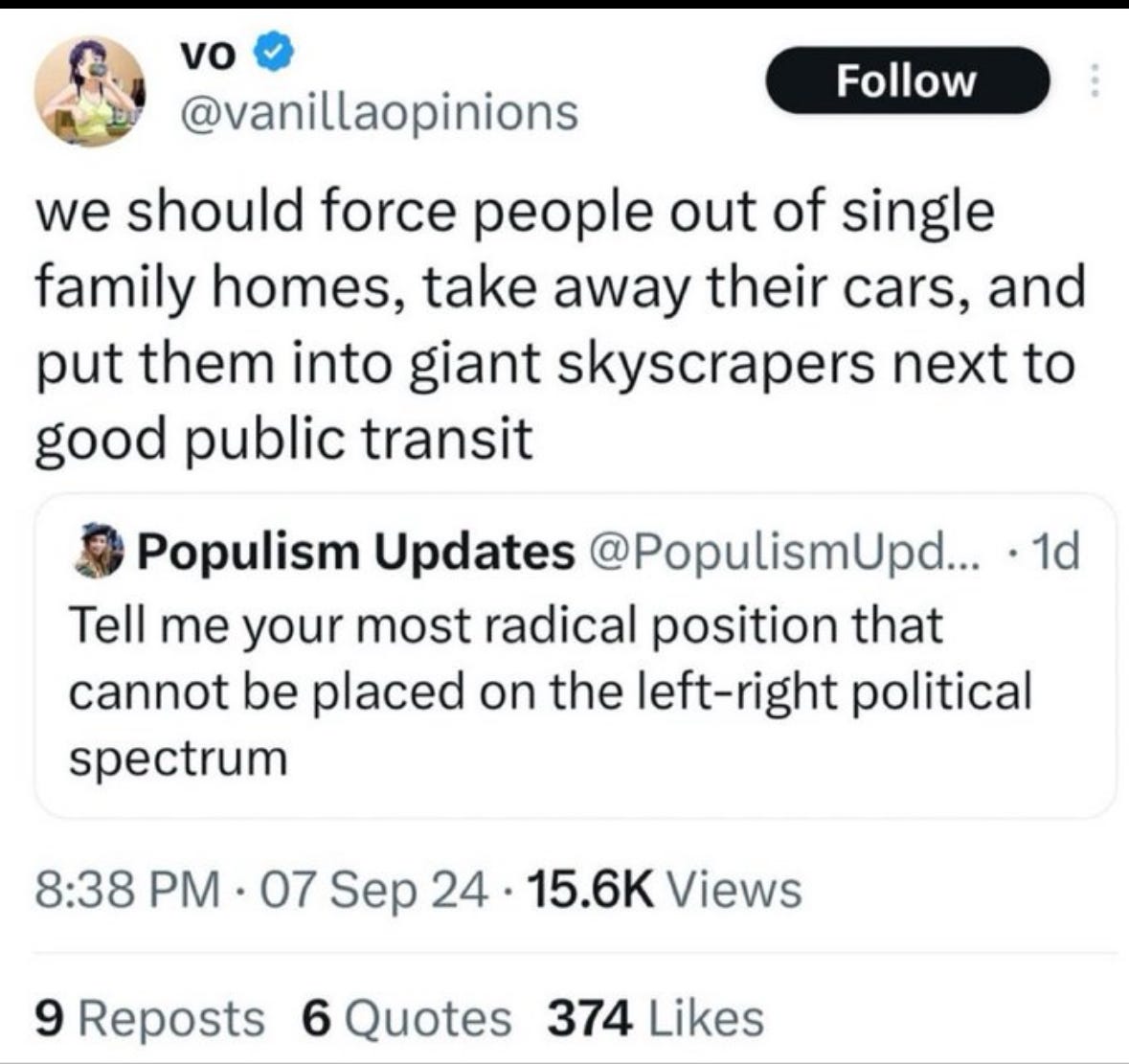
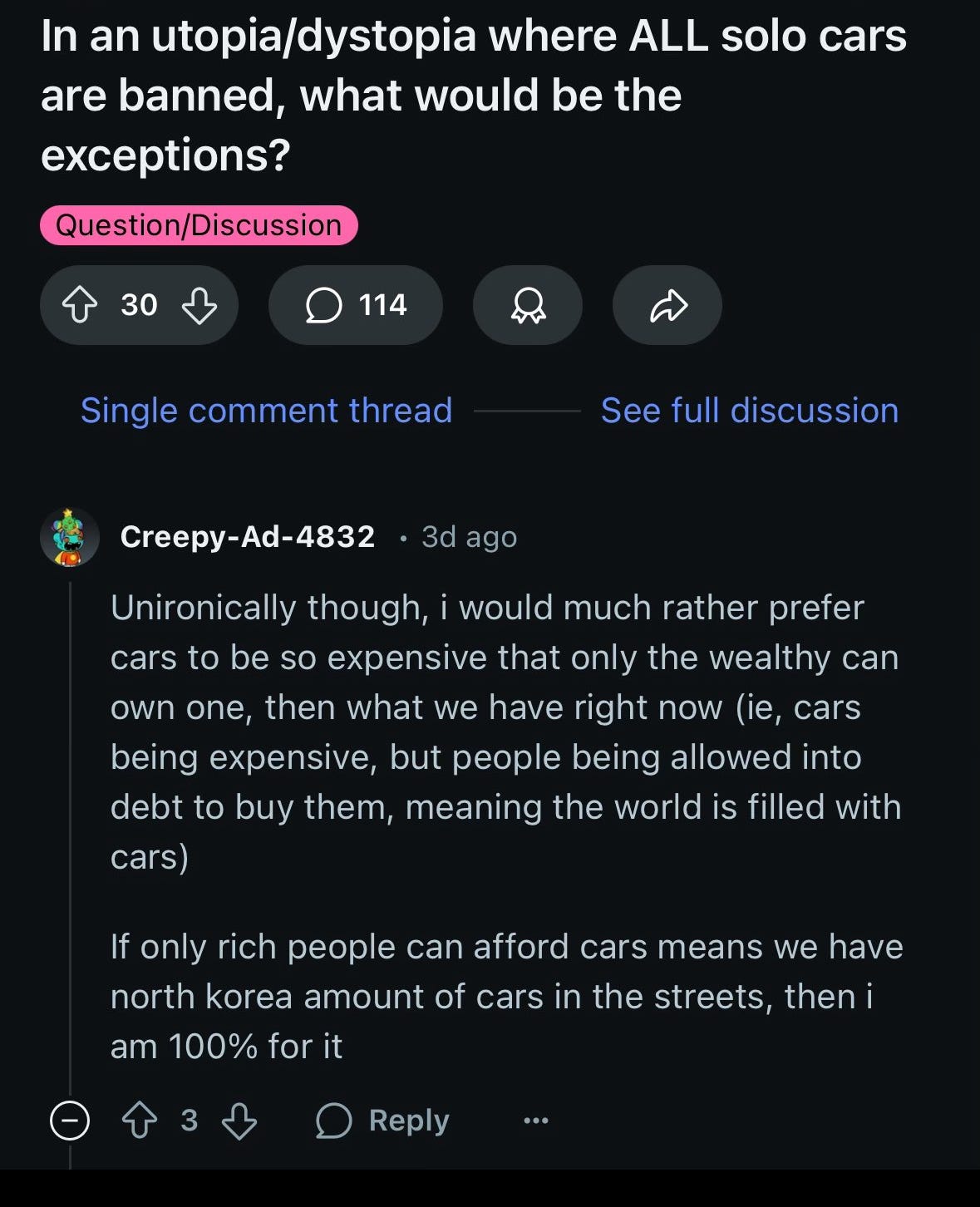
Apparently that arrangement is not acceptable for a the insect-brained tech utopians that make up the “anti-car” movement.
These self-appointed Sheriffs of the Universe become hysterical at the mere thought of private car ownership. They’re all too happy to issue their psychotic decrees to anyone who will listen.
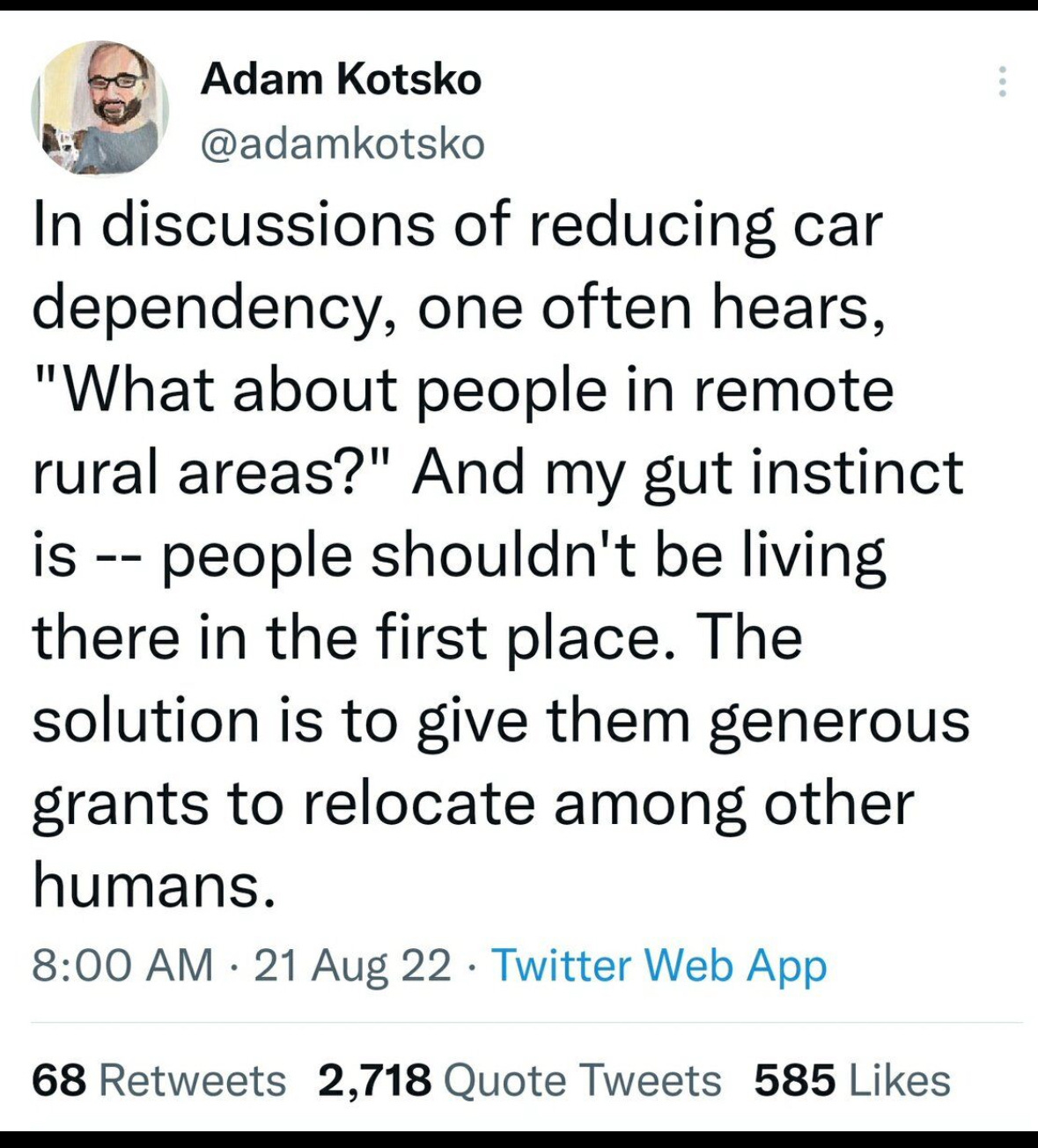
Unlike these delusional psychos, I love owning a car. I love being in control of not only how and where I travel, but more importantly, who I’m traveling with.
Here are some things I do not love, all of which come along with public transportation:
Relying on a bus or train schedule.
Keeping one eye on the heroin addict at all times as he nods off and pisses himself.
Being assaulted by terrible music from Bluetooth speakers at full volume.
Dodging confrontational schizophrenics as a part of my daily commute.
No. I will drive a car. My car.
No amount of screeching redditors will ever change that.
Man-Made Horrors
Not that they won’t try. While these people haven’t managed to outlaw private car ownership just yet, they are certainly doing everything they can to make new cars terrible:
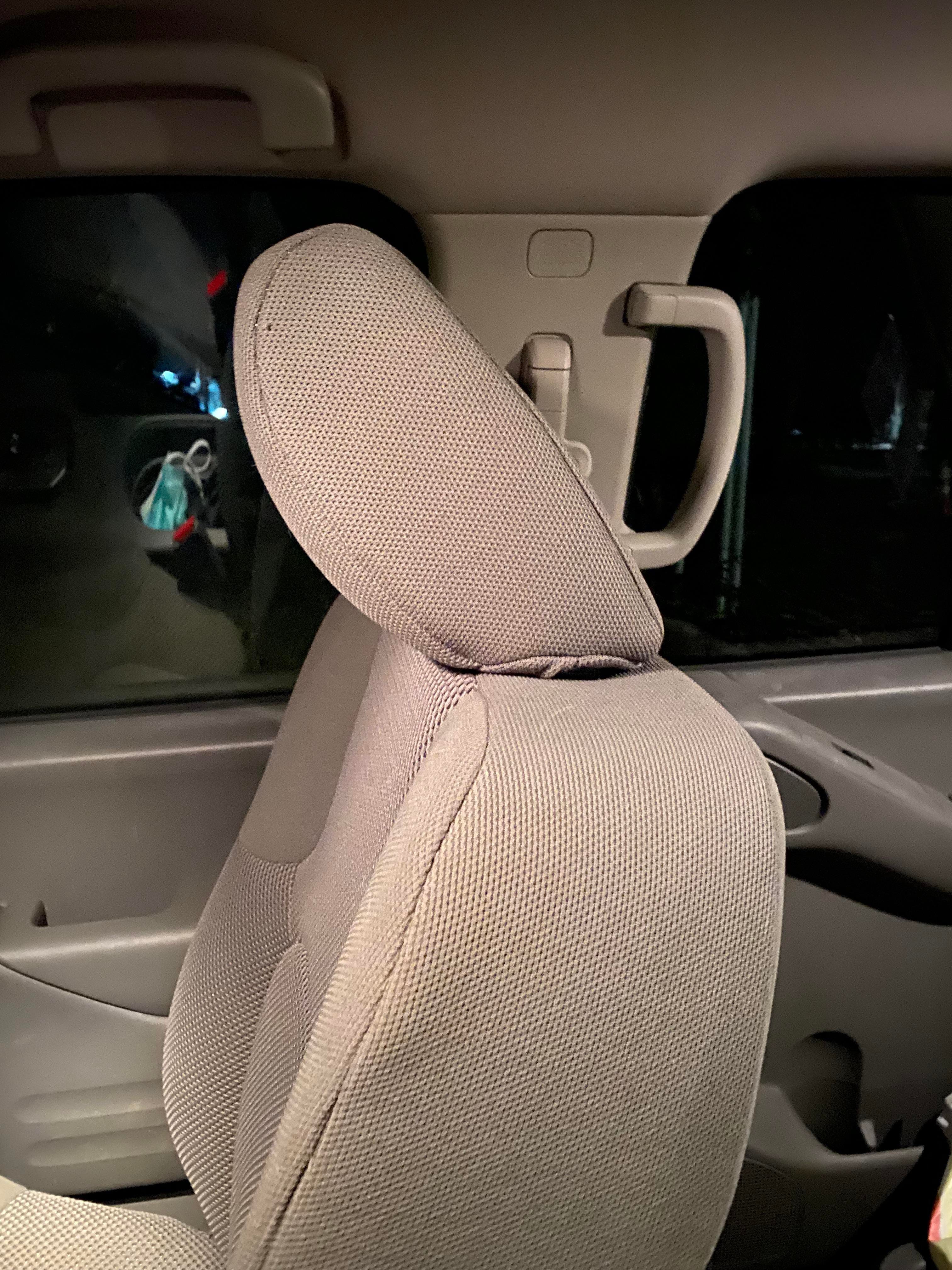
Headrests canted at unnatural angles.
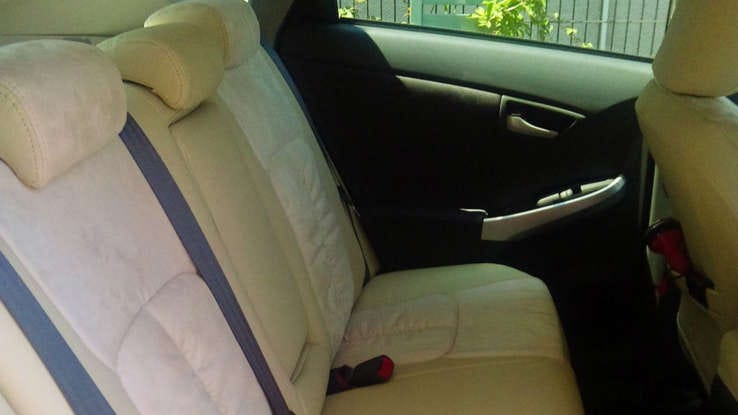
Seats with nearly non-existent leg support.
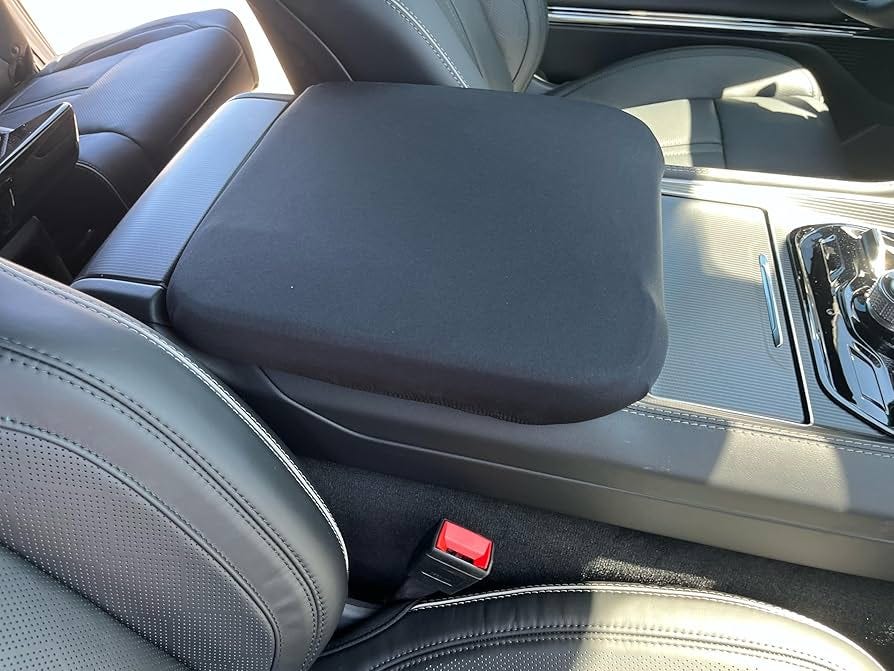
Center consoles that fill 2/3 of the front cabin.
Flared and swooped door panels.
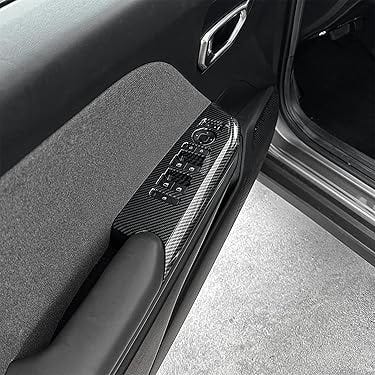
A deliberate narrowing of the driver’s space to emulate the cockpit of some kind of experimental aircraft.
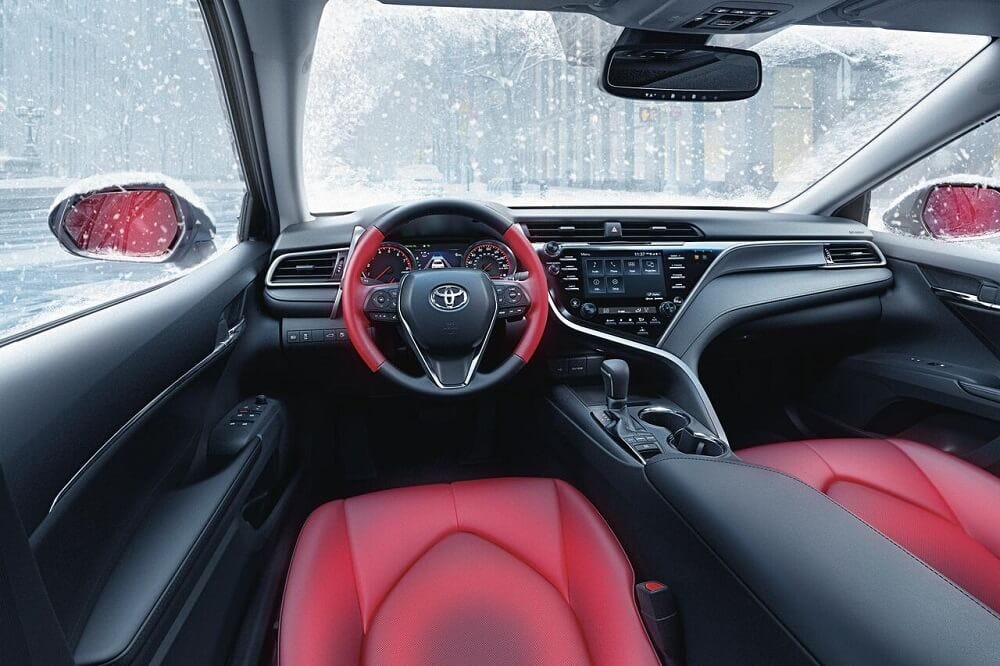
Anything they can think of to rob you of the ability to sit in a relaxed and comfortable posture while driving your car.
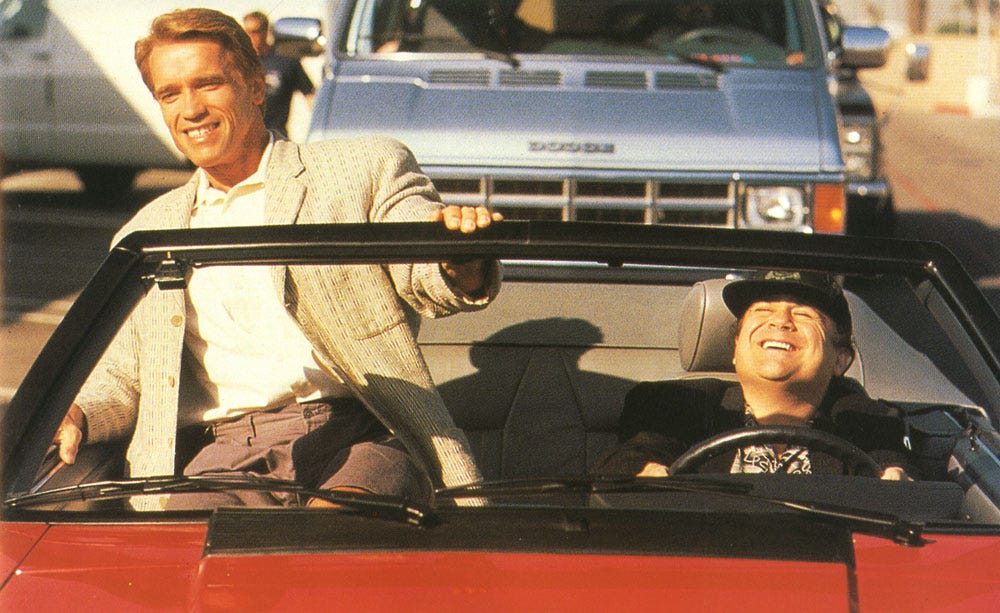
It isn’t that the cars have become smaller. In fact, many modern vehicles are now larger than their predecessors. The problem is that virtually none of that space has gone to the occupants. Instead, designers have developed an insatiable addiction to filling as much space as possible with bulky, swooping pieces of plastic. Any occupant larger than Danny DeVito is now at a marked disadvantage.
Why are we doing this to ourselves?
We’ve never been fatter or more addicted to comfort. So, why do our cars keep getting narrower and more rigid each year?
Who is this for?
Benched
Things weren’t always this way. Many of us can still remember a time when cars were built not to satisfy a faceless bureaucracy, but for the people that drove them. We used to take for granted features such as:
Wide open cabins.
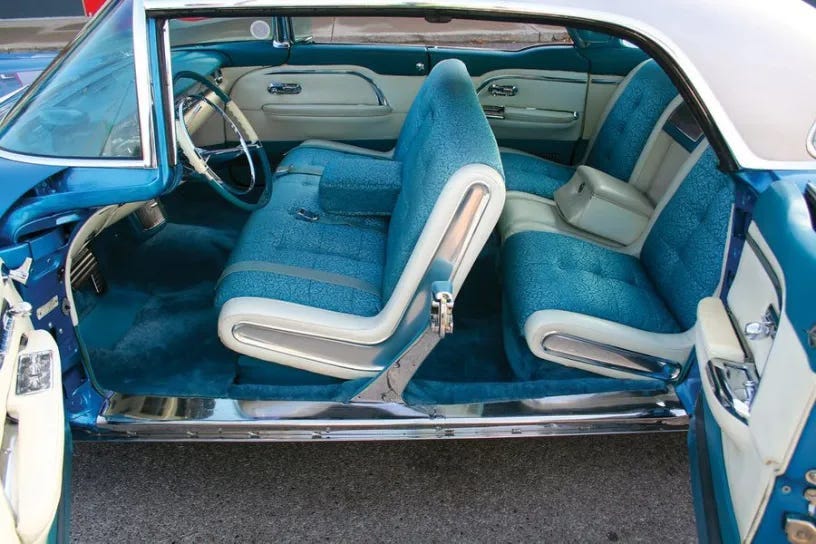
Large luxurious seats.
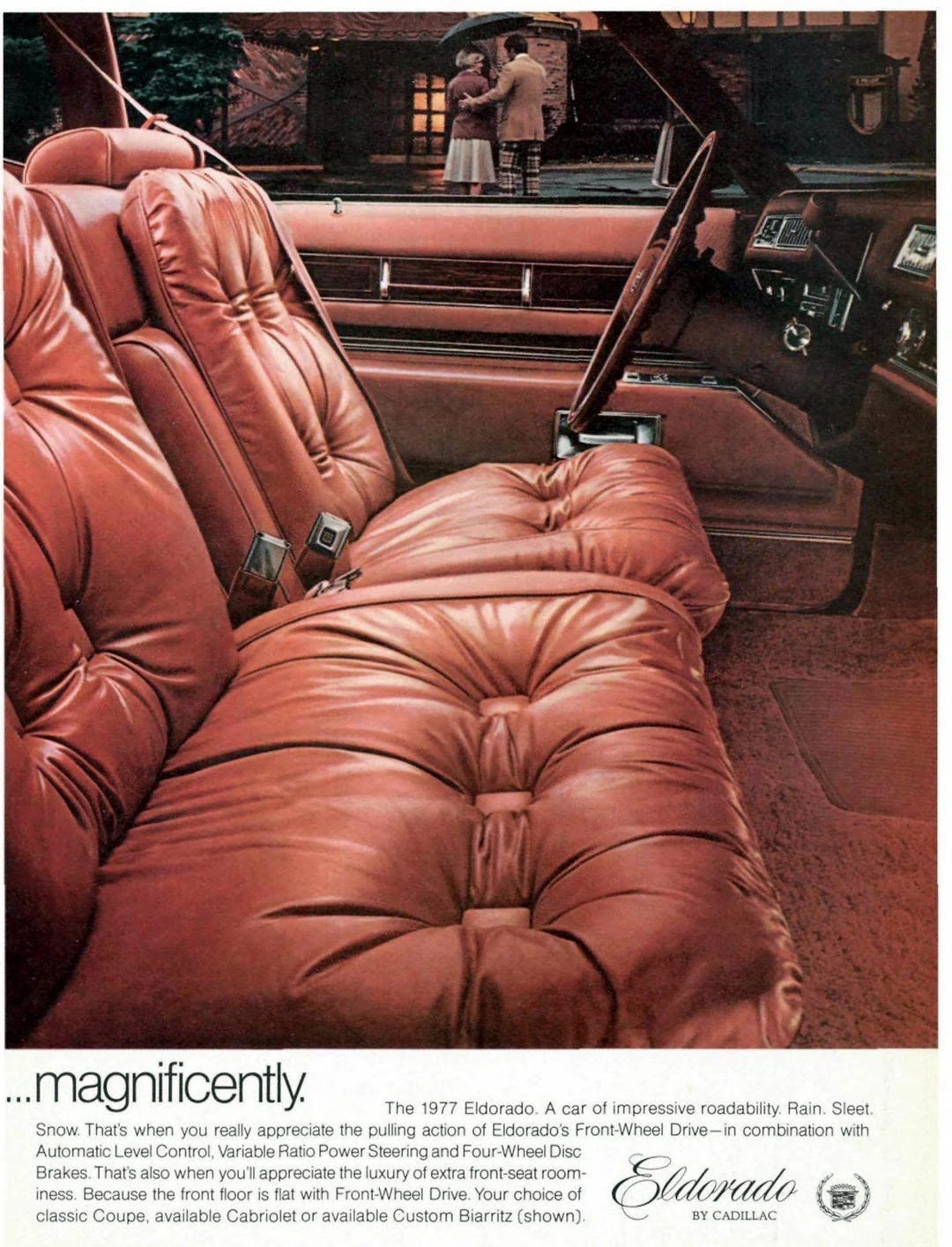
Leg room.
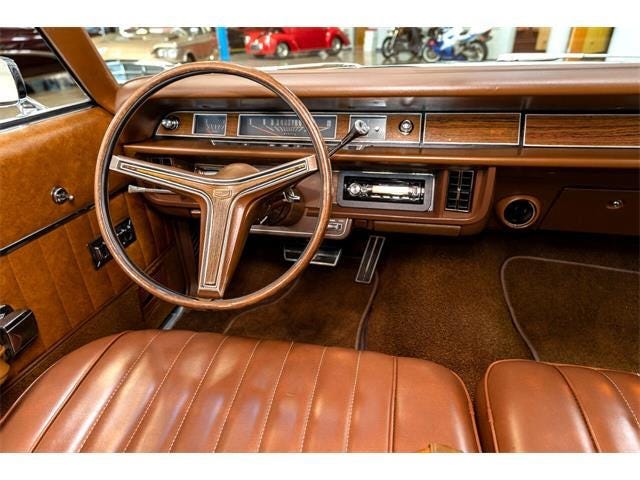
Hip room.
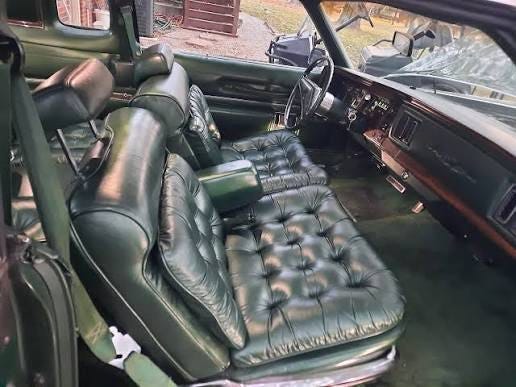
It was a better time. Unfortunately, the problems with modern cars extend beyond just the cabin.
Make It Stop.
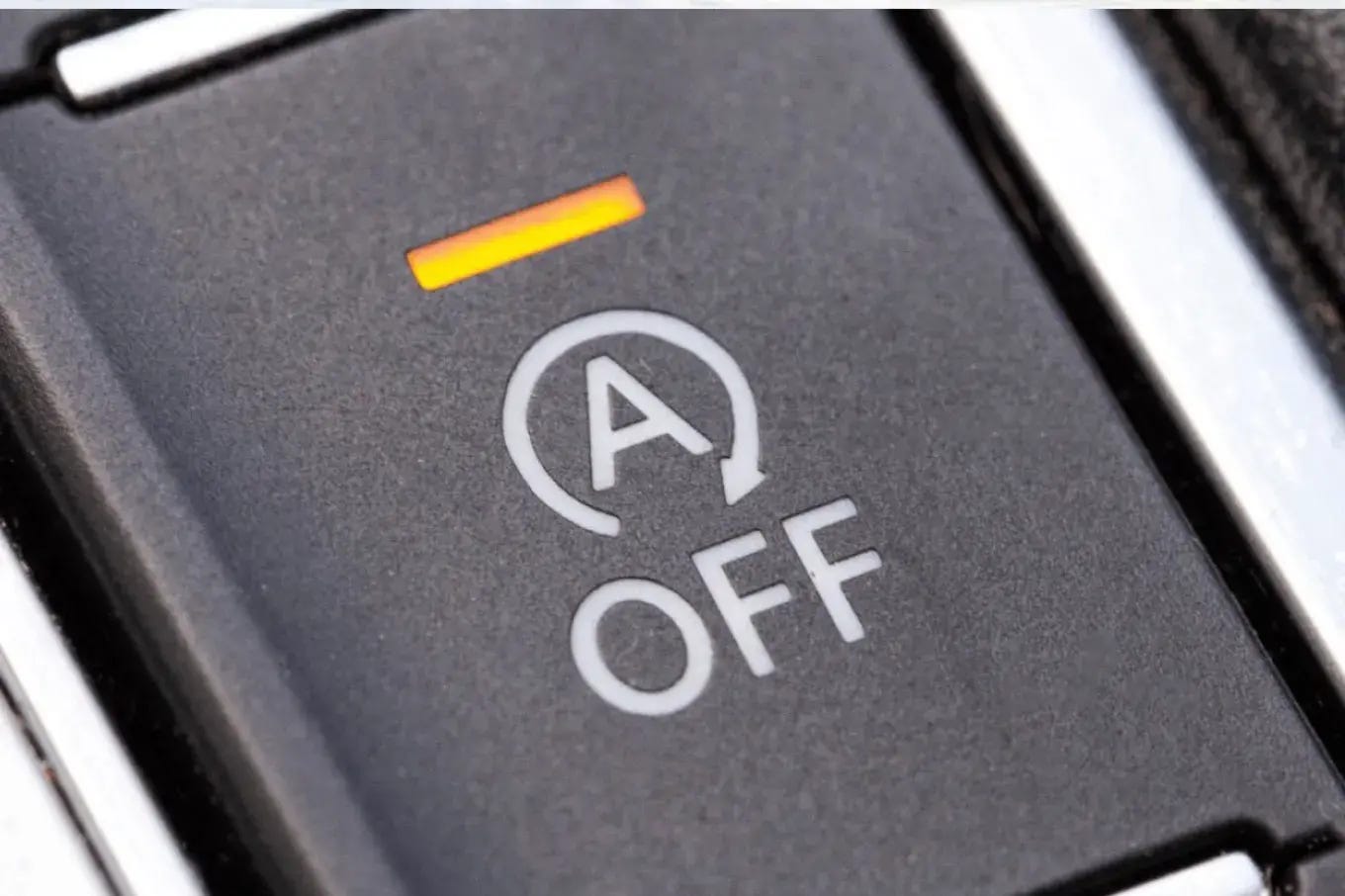
This is the automatic stop feature.
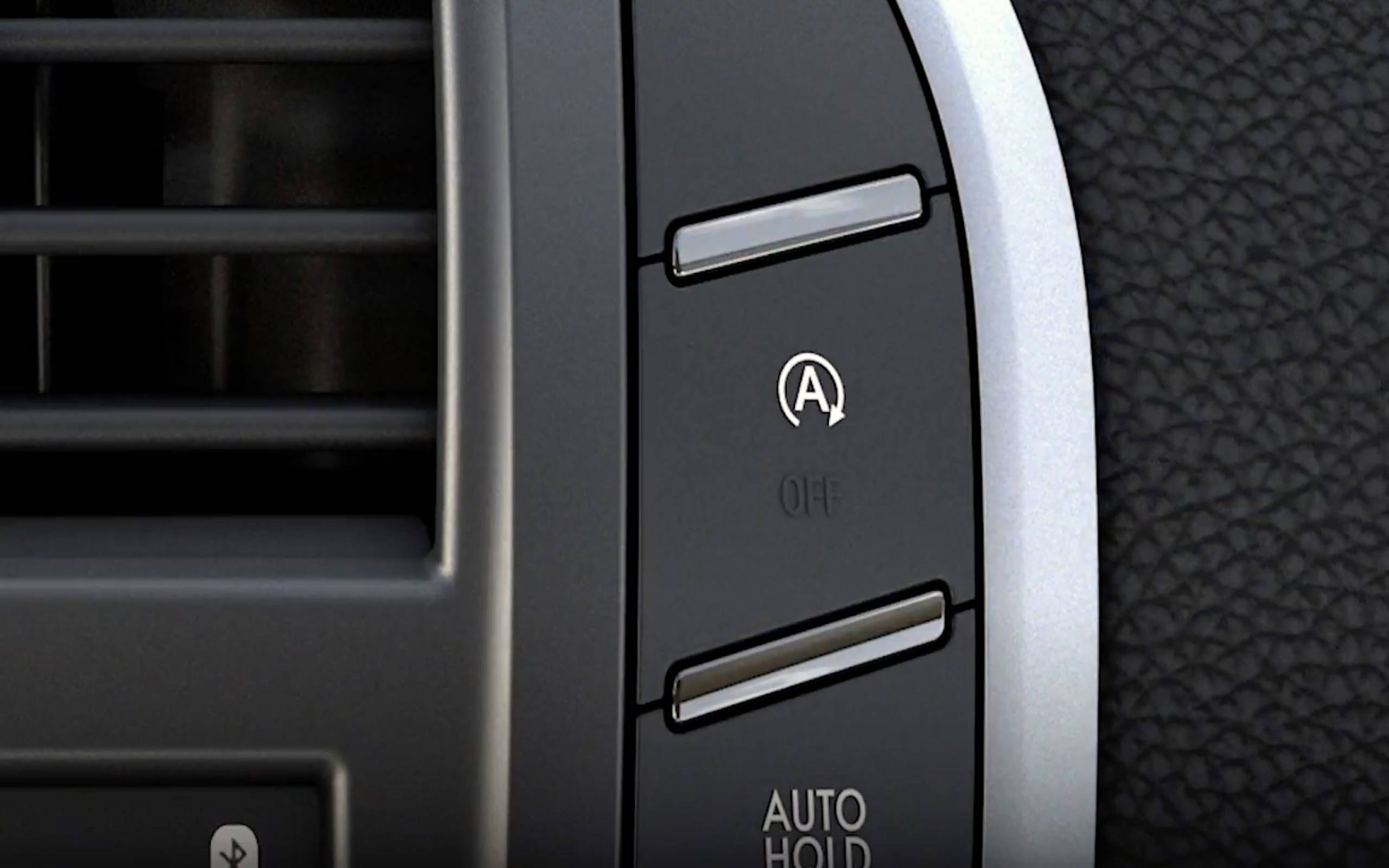
Most new cars have been equipped with it. Whenever your car comes to a stop for more than a second or two, this feature will partially kill the engine to avoid burning fuel while idling. When the driver presses the accelerator, the car restarts. As anyone who has ever driven a car can imagine, this quickly becomes infuriating to deal with. The flow of driving is disturbed constantly and the strain this puts on engine components (despite ridiculous manufacturer claims to the contrary) is significant.
Why does this exist? The answer is compliance with CAFE (Corporate Average Fuel Economy) standards. These are government regulations dictating the total average fuel efficiency of any car manufacturer’s fleet. Bigger vehicles naturally get poorer mileage, and in order to raise their averages and comply with the government standard, carmakers have devised nonsense like the automatic stop feature.
Box checked. Carmaker paid. Customer left to deal with an inferior product.
CAFE standards are also what killed off mid-sized trucks in this country. For many years, some of the best and most functional vehicles you could buy were mid-size pickups. Ford Rangers, Chevrolet S-10s. These vehicles were everywhere throughout the 80’s, 90’s, and 00’s. While not big or powerful enough for serious trade work, they were well suited to hauling light loads around town while also serving as standard passenger vehicles. These trucks were reasonably priced, reliable, and uncomplicated.
XL
My first car was a battered but still solid 1995 Ford Ranger.
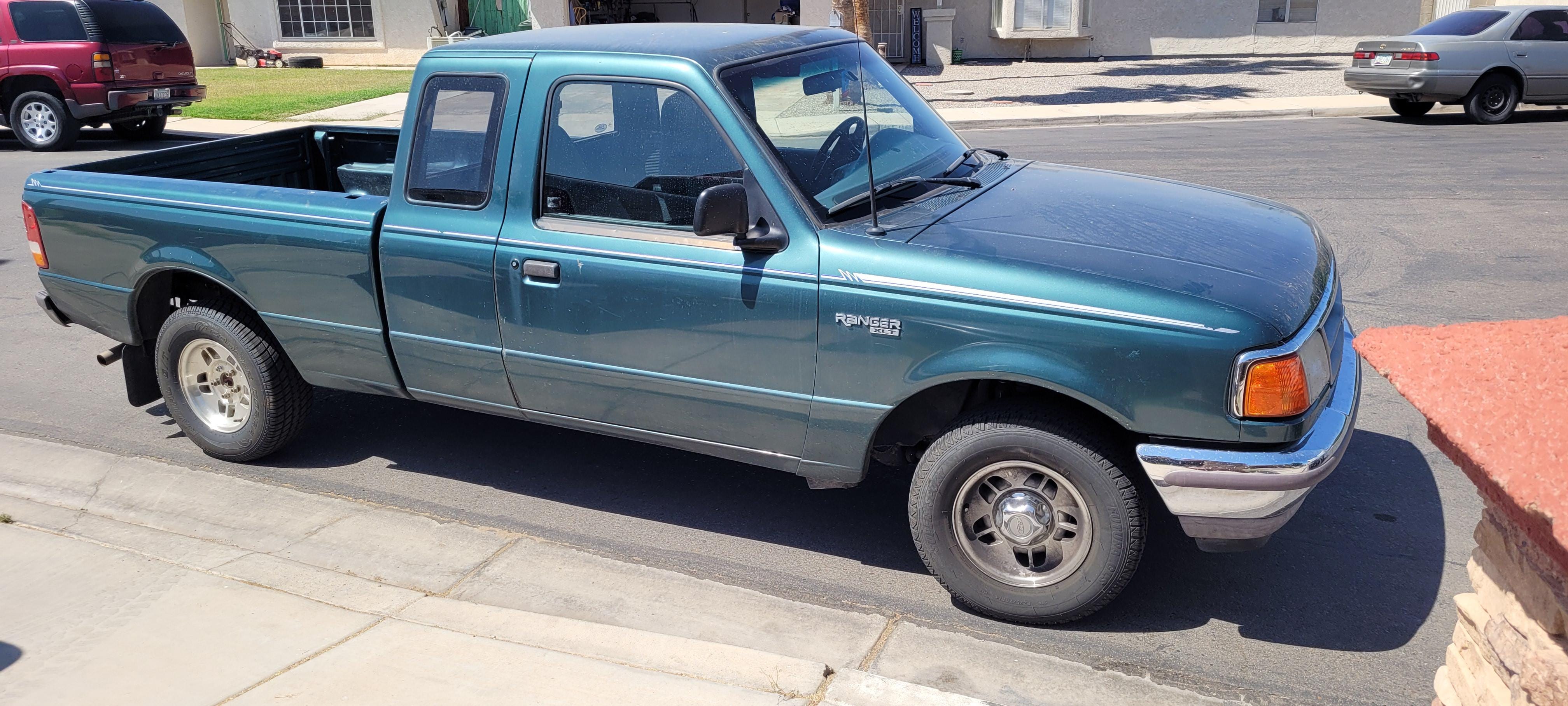
I loved that truck.
There were no complications.
No accounts needed to be created.
No subscriptions were required.
No wrongheaded ideas from an adderall-snorting MBA about what people really want in a truck were even considered.
Just a bed, a cab, an AM/FM radio and an assurance that I wouldn’t be constantly bothered by problems being sold to me as premiums.
Those trucks are long gone. Ford did start making Rangers again in 2017, but they’ve eliminated almost all of the good things about the original trucks and loaded the new ones with nonsense features that make the truck twice as expensive as it used to be.
And what do you get for that ridiculous amount of money? A car that is less affordable, less reliable, less comfortable, and less functional than the one you bought for half the price 20 years ago. In 2025 you’ll drive a car that actively makes you hate it and pay hundreds of dollars a month for the privilege.
Our cars are lame. And when cars make up a big part of our lives, this means a big part of our lives will also be lame.
Our time on Earth is brief. How much of it do we want to spend quietly settling for whatever soulless garbage is tossed our way?
Shooting The Messenger
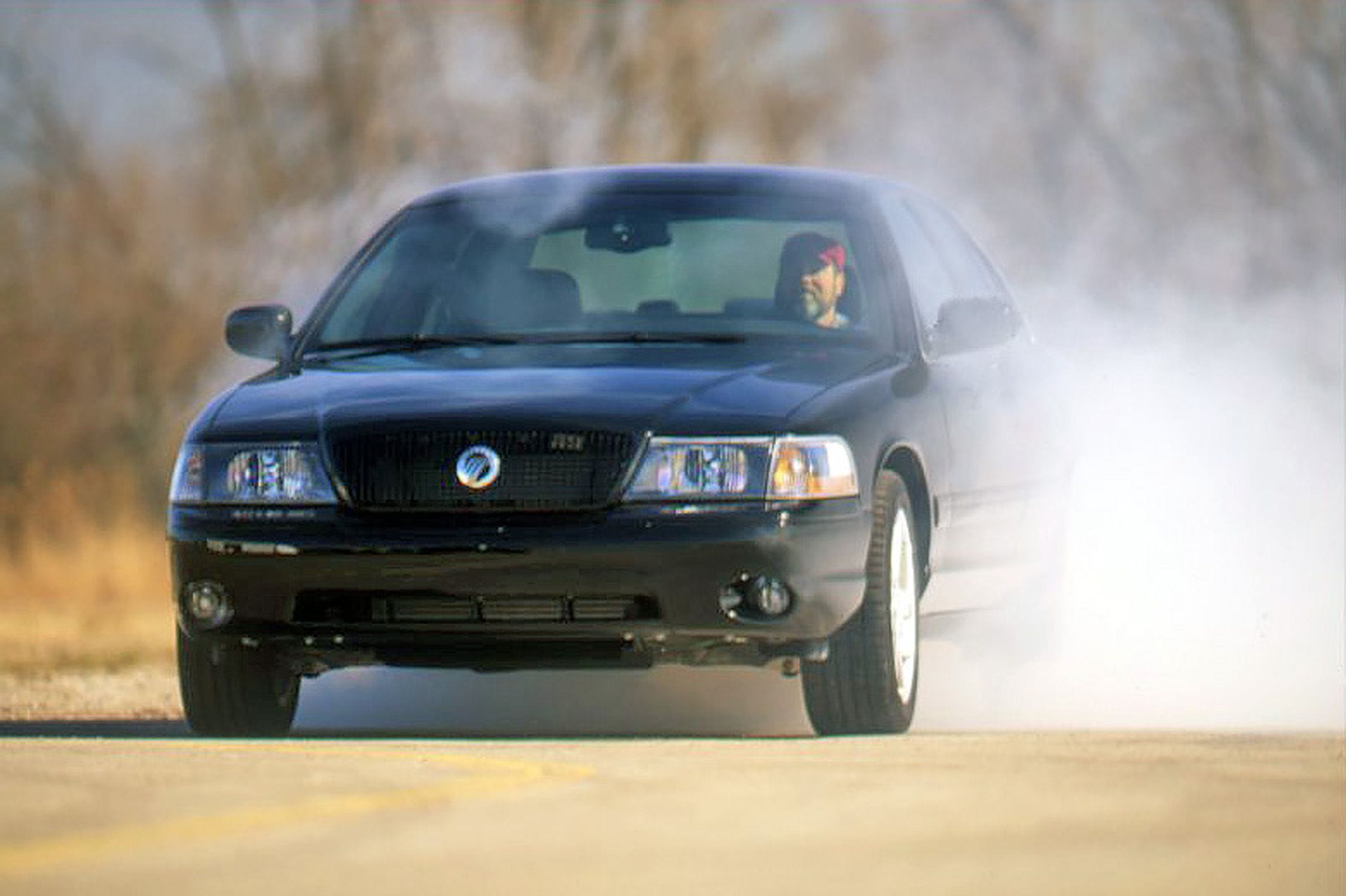
This is the 2003 Mercury Marauder. Just look at it.
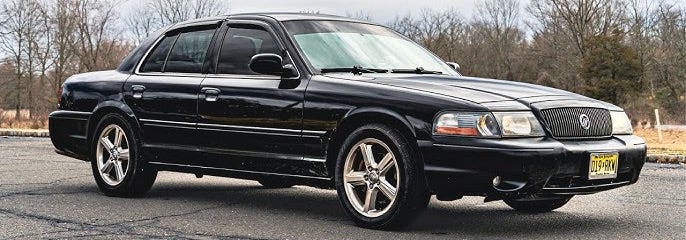
It’s gigantic.
It’s impractical.
It gets about 14 miles per gallon.
There is no reason for this car to exist.
They made it anyway.
If you bought one new, it even came with a leather jacket:
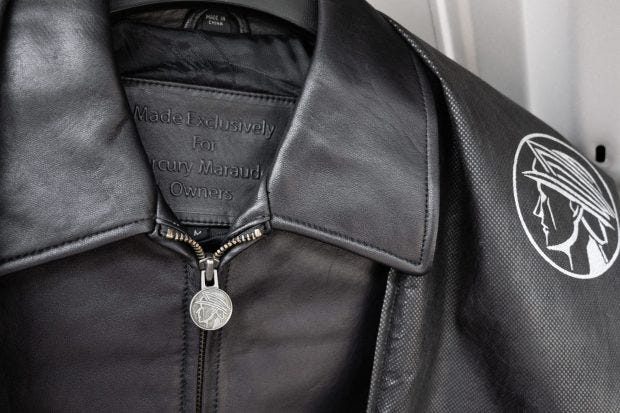
It’s incredible. This car is amazing and I love it.
The Marauder didn’t care about being thoughtful or sustainable or environmentally sound. It was just unapologetically awesome for the sake of being awesome. Sometimes that’s all that really matters.
I want a big stupid sedan.
I want to feel like I’m piloting a small living room around town.
I want to be able to stretch out and relax on long highway trips.
I want to drive a car that was created by and for a human being. Not some grey, plastic, market-research-spreadsheet blob.
I want it to be impractical.
I don’t care how much fuel it burns.
I don’t care about the emissions.
Absolutely no part of this car will ever be integrated into a digital ecosystem.
I want a car that is comfortable and simple.
I want a car that doesn’t feel like its purpose is to make my day worse.
I want it to be big.
In fact, make it way too big.
Obnoxiously big.
I don’t care.
Make it big and loud and comfortable and ridiculous.
The people who made this car understood something important about life.
They got it.
They got me at least.
I’m a human being. I’m alive. I want a car that reflects that.
You Want It To Be One Way…
Sadly, today’s cars perfectly encapsulate the opposite of that attitude:
A feeling of being artificially and unnecessarily restrained by unseen forces.
Of being surrounded at all times by cheap plastic.
A persistent sense that everything around you has been designed by entities that hate you.
That the only options ever presented to you are all terrible, and will only get worse with time.
Much of modern life feels this way.
Maybe cars aren’t your thing. But I’ll bet you’ve had the same feelings about architecture, or art, or food, or any of a million other aspects of life today. That same downward shift. We’ve all felt it. The things that once gave color and personality to our daily lives keep drifting further into the past. All of it replaced by a quiet collective grief amongst those who remember a better world.
We don’t have time for this.
This nihilistic societal race to the bottom can’t continue. What is the point of life if we accept meaninglessness and efficiency as our guiding principles? Why bother with anything? A life spent focused only on the optimization of all things at all times is no life at all. Not a human life, anyway. That behavior is fine for bees or ants, but humans aren’t meant to live like this.
Without a genuine sense of life in the things we do and surround ourselves with, our souls begin to starve. We are not lines on a spreadsheet. We are built to appreciate higher things. The world we live in has abandoned that human element and it has made us all insane.
…But It’s The Other Way
The decline of the material quality of our lives is still only a symptom of the greater issue. Everything we are dealing with today stems from a widespread loss of connection and community. Without those things, we can never experience the full range of human emotions or be truly invested in our society at a macro level. This is what has led to the rot we see all around us.
People who love and care for their neighbors and communities naturally develop an interest in the continued success of those things. They begin to demand more from themselves and others. Standards are more difficult to overlook. A stake in the things that surround us becomes more tangible. Architecture, cars, public spaces, civility, all of this is downstream from connection to a place and its people. We lost that connection. Everything after that was inevitable.
I’m not saying that forming a local group in your community will magically bring back better cars or houses or public buildings. But we have to remember that the reason all those things existed in the first place is because of groups and communities that cared about making the world around them better and more conducive to a meaningful human existence. The template isn’t magic, but it does matter.
Focusing on the problems with our institutions and the state of material products and services is working backwards. Instead, our attention should be shifted toward forming real connections with those around us. That may sound a lot easier said than done. It is. But that doesn’t make it any less necessary.
What good could ever be expected from a society full of people that want nothing to do with each other? Why would anything ever improve under those conditions?
We can’t hope for a better future if we aren’t willing to accept the responsibility of building a deeper connection with our neighbors and our communities. If we can start working on that, the rest will largely take care of itself.
We can just do things. Think locally, act locally.
…and, a flip phone equivalent car would be a hot option.
We are down to having to build our own cars. Or luck into anything 20+ years old and in good shape.